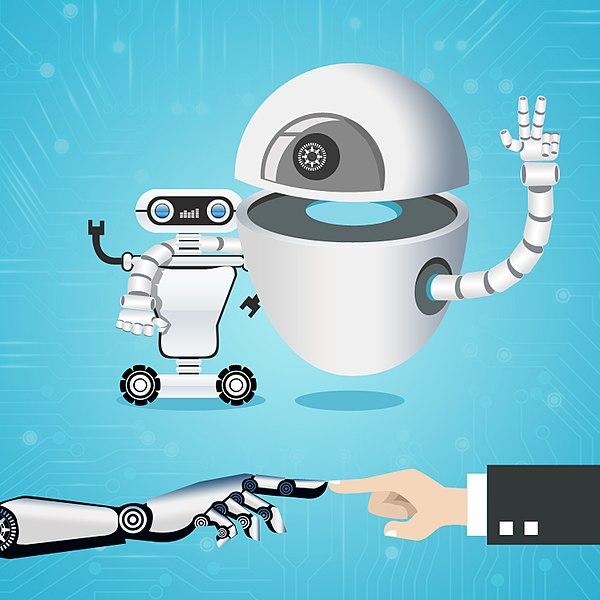
Not long ago, artificial intelligence and automation were seen as shiny extras — nice to have, but not necessary. Today, that idea feels outdated. In 2025, AI and robotics have become the invisible framework that holds modern businesses together. From warehouses and hospitals to marketing firms and manufacturing floors, these technologies aren’t just tools anymore. They’re the new connective tissue — linking data, people, and processes into a single intelligent system that moves faster and adapts better than any human network alone.
From Flashy Upgrades to Daily Essentials
There was a time when “AI integration” meant having a chatbot or predictive dashboard that executives could show off at conferences. It looked impressive but rarely changed how the company worked. That’s no longer the case.
After years of digital transformation talk, organizations have learned that scattered software systems and disconnected data slow everything down. The new focus is integration — using AI to tie departments, devices, and decisions into one coordinated flow.
Robots now move inventory in sync with AI-powered demand forecasts. Smart scheduling systems automatically balance workloads and maintenance. Even customer service is evolving, with AI triaging requests and routing complex issues directly to human experts.
Businesses that once treated automation as a luxury are discovering it’s the difference between efficiency and chaos.
The New Nervous System of Industry
In every sector, intelligent connectivity is reshaping how work gets done. Manufacturers use AI to predict equipment failures before they happen. Logistics companies run fleets where self-guided robots and algorithms plan routes in real time. Healthcare networks link patient records, supply systems, and diagnostic tools into single intelligent frameworks.
This shift is turning businesses into adaptive organisms — constantly learning, optimizing, and responding. When a disruption hits, whether it’s a supply chain delay or a sudden market swing, AI doesn’t panic. It recalculates.
The companies leading this movement see automation not as an add-on, but as the nervous system of their operations — something that helps every other function move in harmony.
Small Size, Smart Systems
What’s most striking is that this revolution isn’t just for the Fortune 500. Affordable cloud platforms and plug-and-play robotics now give small and mid-sized firms access to the same intelligence once reserved for industry giants.
A local manufacturer can use AI-driven analytics to forecast raw material needs. A small logistics company can deploy warehouse robots to manage inventory automatically. Even small marketing teams are using machine learning to personalize campaigns and measure performance in real time.
In other words, smart systems are leveling the playing field. Business growth no longer depends solely on size or headcount — it depends on how effectively humans, data, and machines work together.
Future-Proofing Through Connection
The next wave of competition won’t be about who has the most people or the largest budget. It’ll be about who connects their systems best.
Companies that treat AI and automation as optional will soon find themselves outpaced by those that have built intelligence into every layer of their operations. The winners will be the ones that make these tools feel seamless — where insights flow automatically, decisions happen faster, and humans are freed from the grind of repetitive tasks.
AI and robotics don’t replace human skill; they multiply it. They create a network where creativity, speed, and precision feed each other continuously.
Building Smarter, Not Just Bigger
For forward-thinking businesses, this is the moment to act. The tools are affordable, the infrastructure is ready, and the payoff is clear: more agility, less waste, and faster growth.
The companies thriving in 2030 won’t be the ones that waited for certainty — they’ll be the ones that built intelligent systems early and let them evolve.
AI and robotics are no longer the future of business. They’re the structure that keeps it moving today. The question isn’t whether to adopt them — it’s how fast you can connect.
Sources:
- McKinsey & Company: “The State of AI in 2025”
- World Economic Forum: “How Automation Is Becoming the Backbone of Global Industry” (2025)
- Deloitte Insights: “Connected Enterprises: Integrating Humans and Machines” (2025)
- Reuters: “SMBs Lead in the New Wave of AI-Driven Efficiency” (2025)