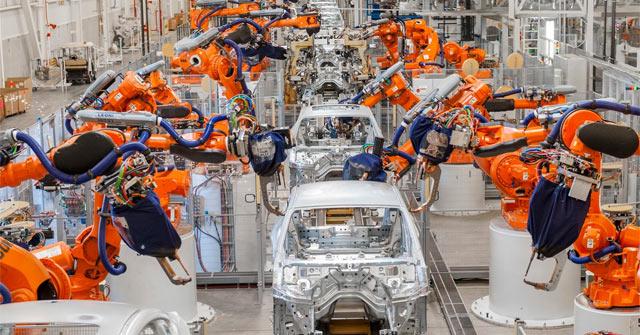
For decades, American manufacturers have lived with a frustrating reality: they knew automation could help them compete, but the price of U.S.-made robots kept that dream out of reach. While factories in other countries adopted lower-cost systems, many American plants were left waiting—knowing exactly what they needed but unable to afford it. Today, Standard Bots’ warning to Congress puts that long-ignored gap in plain view. It highlights a market full of demand but short on affordable supply, and it raises a question many small manufacturers have been asking for years: why is modernizing still so expensive in the country that helped invent industrial robotics?
In the past, factories across the U.S. watched automation become the global standard. Countries with cheaper systems scaled up quickly. But here, even simple robotic arms often carried price tags that made them feel like luxury items instead of essentials. Smaller shops wanted to boost output, reduce strain on workers, and keep up with competitors—but the math never added up. The void grew wider each year: American teams had the will but not the wallet. And because those early costs stayed high, automation became something many talked about but few could realistically adopt.
That tension is now reaching a breaking point. Standard Bots’ recent testimony to Congress signals how much pressure has built up. Demand for robots is rising across nearly every industry, yet the domestic market still struggles with high prices, limited availability, and aging supply chains. A few big players dominate the field, but their systems often cost far more than global alternatives. This uneven supply means U.S. firms face the worst of both worlds: a clear need for automation paired with a marketplace that can’t deliver it affordably. It’s a system built for the past, not the present.
This mismatch creates real pain for small manufacturers. They may want to modernize, but many are forced to delay upgrades year after year—right as cheaper imported robots make rapid gains overseas. When a plant in another country can install a robot for a fraction of the cost, it changes the entire rhythm of production. It speeds up output, cuts labor strain, and opens room for new lines of business. Meanwhile, American teams are left stretching aging equipment and overworked staff, knowing that the tools they need already exist—just not at a price they can justify.
These delays don’t just slow down factories. They slow down communities. They slow down entire industries. When modernization is uneven, the economic ripple effects are too. And as more global manufacturers gain strength through affordable automation, the competitive tension grows. It becomes harder for U.S. factories to win contracts, retain workers, or plan for the next decade. That’s why Standard Bots’ warning carries weight: the cost gap isn’t just inconvenient—it’s a strategic weakness.
But the moment also brings possibility. If reforms move forward—whether through incentives, new manufacturing investments, or updated import policies—the future could look very different. Lower-cost, domestically produced robots would give U.S. teams a fair shot at modernizing without betting the entire business. They’d allow small manufacturers to automate simple tasks like palletizing, welding, packaging, and materials movement—tasks that make a huge difference on tight margins. Affordable robots would also open doors for shops that have never automated before, helping them grow, hire differently, and compete on new terms.
The real vision is a manufacturing landscape where automation isn’t rare—it’s normal. Where small plants can scale without relocating overseas. Where workers get support instead of burnout. Where the U.S. regains ground not by cutting corners but by giving its businesses the same tools other countries take for granted.
Fixing the cost problem won’t happen overnight, but the first step is acknowledging the void that’s been ignored for too long. High robot prices have held American factories back, even as global competition raced forward. Now, with policymakers paying attention and new players pushing for change, businesses can start imagining a future where homegrown automation is within reach. A future where the tools needed to modernize are priced for reality—not just for giants.
Sources:
Standard Bots public testimony and industry commentary
U.S. manufacturing and automation cost analyses
Reports on global robotics pricing and adoption trends