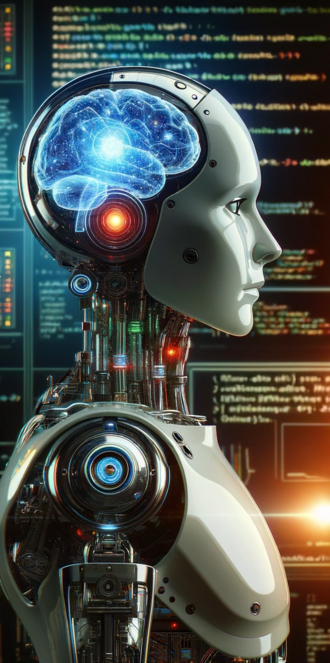
For a long time, robots felt like a letdown. For a long time, robots felt like a letdown. Movies showed machines that could think, move, and help anywhere. Reality delivered robotic arms stuck behind safety cages, repeating the same motion all day. Outside of big factories, robots were fragile, expensive, and hard to manage. For everyday businesses, they sounded impressive—but didn’t fit real life. That gap is finally closing, and it’s happening faster than many expected.
The Old Reality: Smart Machines in Dumb Situations
Traditional robots were powerful but narrow. They worked best in clean, predictable spaces like car factories. Every movement had to be planned in advance. If something changed—a box moved, lighting shifted, a person walked by—the robot stopped or failed.
This made robots risky for small and mid-sized businesses. Warehouses, farms, hospitals, and stores are messy environments. People move around. Objects vary. Conditions change daily. Robots that couldn’t adapt simply weren’t worth the trouble.
So for decades, robotics stayed mostly behind the scenes. The promise was always “almost there,” but usefulness never quite arrived.
What Changed: Robots Learned to See and Decide
The breakthrough didn’t come from better motors or metal. It came from AI.
Modern robots are now powered by the same kinds of AI systems used in image recognition and language tools. This allows them to see their surroundings, understand what’s happening, and adjust in real time. Instead of following rigid scripts, they respond to situations.
A warehouse robot can now spot obstacles and reroute itself. A cleaning robot can recognize different floor types. A delivery robot can slow down near people and speed up in open spaces.
Companies like Boston Dynamics helped prove what was possible with advanced movement. More recently, AI research from groups like OpenAI has pushed perception and decision-making forward. Together, these advances are turning robots from mechanical tools into adaptive systems.
From Experiments to Helpers
This shift is changing how analysts and business leaders think about robotics. Robots are no longer judged by how impressive they look in demos, but by whether they save time, reduce injuries, or fill labor gaps.
That’s why robots are quietly showing up in places they never could before: small warehouses, commercial kitchens, hospitals, and retail backrooms. They’re not replacing entire teams. They’re handling the dull, dirty, or dangerous tasks that humans avoid.
This practicality matters. When robots are framed as helpers, not replacements, adoption becomes easier. Employees don’t see them as threats. Owners don’t see them as risky bets. They become another piece of equipment—like forklifts or conveyor belts—that just happens to be smarter.
Why This Moment Is Different
Robotics has had hype cycles before, but this one is sticking for a reason. AI gives robots context. Instead of asking, “What exact step comes next?” robots can now ask, “What’s happening around me?” That’s a huge shift.
It also lowers costs. Training a robot used to take months of custom programming. Now, many systems learn from examples or simulations. That means faster setup and quicker returns.
For everyday businesses, this changes the math. Robots don’t need perfect conditions anymore. They can work alongside people, adjust to changes, and improve over time.
The Future: Machines as Teammates
Looking ahead, the line between AI software and physical robots will keep fading. Voice commands, visual understanding, and decision-making will merge into machines that feel more like coworkers than tools.
In a future where hiring is hard and turnover is high, robots could provide stability. They won’t replace human judgment or creativity, but they will handle routine work reliably. That frees people to focus on customers, problem-solving, and growth.
In the past, businesses wanted robots but couldn’t use them. In the present, they value flexibility and reliability—and robots are finally delivering. In the future, working alongside machines may feel normal, even expected.
Robots didn’t suddenly become magical. They became useful. And that may be the most important breakthrough of all.
Sources
MIT Technology Review – Advances in AI Robotics
McKinsey & Company – Automation and the Future of Work
Boston Dynamics – Research and Commercial Robotics Insights