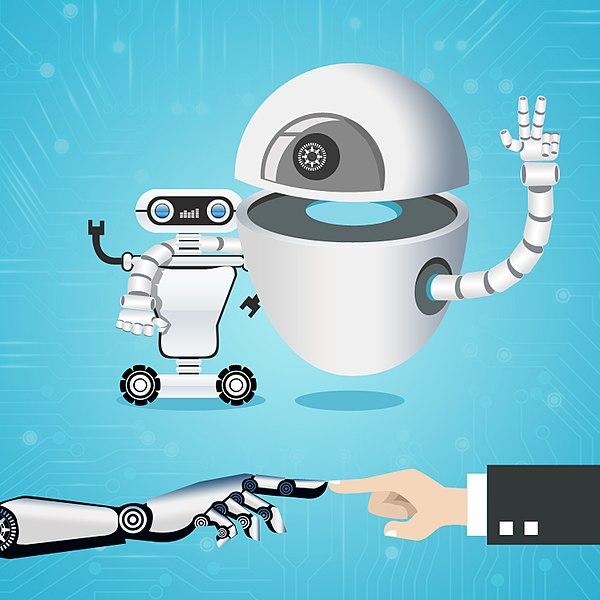
Not long ago, robots felt like something out of reach. Small business owners could admire them from afar but never imagine having one sweep their floors, stock their shelves, or greet their customers. That line between “their world” and “ours” is starting to blur. SoftBank’s recent $5.4 billion acquisition of ABB’s robotics division shows that investors now see robotics not as an industrial luxury but as the next wave of mainstream technology — powered by what many are calling “physical AI.”
From Factory Floors to Front Desks
ABB has long been a leader in industrial automation, supplying the kind of precise, heavy-duty robots used in manufacturing. But SoftBank’s move signals something different: a push to bring those same robotics capabilities into daily life.
This shift is part of a broader trend — where robots are no longer just programmed to repeat tasks, but learn from their environment through artificial intelligence. A robot that once needed a technician to teach it every move can now adapt on its own, guided by sensors, vision systems, and cloud-connected AI models. For businesses, that means a world where machines don’t just replace labor — they collaborate with people.
The Merging of Hardware and Software
For decades, robotics and AI developed on separate tracks. Hardware was slow, expensive, and specialized. AI, meanwhile, lived in the digital realm — in apps, chatbots, and data centers. Now, the two are fusing together.
SoftBank’s acquisition is a clear signal that this merger is reaching a turning point. By combining ABB’s physical robotics with AI tools from its vast tech portfolio, SoftBank is betting on a future where smart machines can work safely and flexibly in real-world settings — from retail shops to hospitals to warehouses.
The result? Robotics is evolving from static hardware to dynamic service platforms — easier to deploy, cheaper to maintain, and designed for human environments rather than factory floors.
Accessible Robotics for Small Business
Until recently, automation was something only large corporations could afford. But costs are dropping fast. Advances in sensors, batteries, and AI chips have made it possible to design smaller, lighter robots that don’t require massive infrastructure to run.
SoftBank’s strategy aims to make robotics accessible to the same types of businesses that once adopted cloud software — small retailers, healthcare clinics, restaurants, and logistics startups. A “robot-as-a-service” model could let these firms rent or subscribe to robots just as they would digital tools.
That means the café on the corner might soon use an AI-powered arm to handle hot drinks or restock supplies — no massive investment required.
The Birth of “Physical AI”
“Physical AI” describes the next evolution of artificial intelligence — one that moves off screens and into the physical world. It’s the difference between a chatbot answering your questions and a robot physically acting on them.
This shift has huge implications. As machines learn to move, lift, build, and respond, industries from elder care to construction could be transformed. It’s also creating new jobs — not in replacing workers, but in managing, training, and maintaining intelligent machines.
SoftBank’s move isn’t just about buying a robotics company; it’s about positioning itself at the center of this physical AI revolution — where smart, adaptable machines become everyday coworkers.
The New Normal
We’ve seen this story before. When cloud computing first appeared, it felt abstract — something only big tech could afford. Then came the tipping point: lower costs, better tools, and accessible platforms that let small businesses compete on a global scale. Robotics is now on that same path.
If SoftBank’s bet pays off, we could soon see robots working alongside people in nearly every industry — as helpers, partners, and even problem-solvers. Physical AI won’t just make machines smarter; it will make the world around us more capable.
Sources:
SoftBank Press Release (2025); Bloomberg; Reuters; The Verge; Robotics Business Review.